
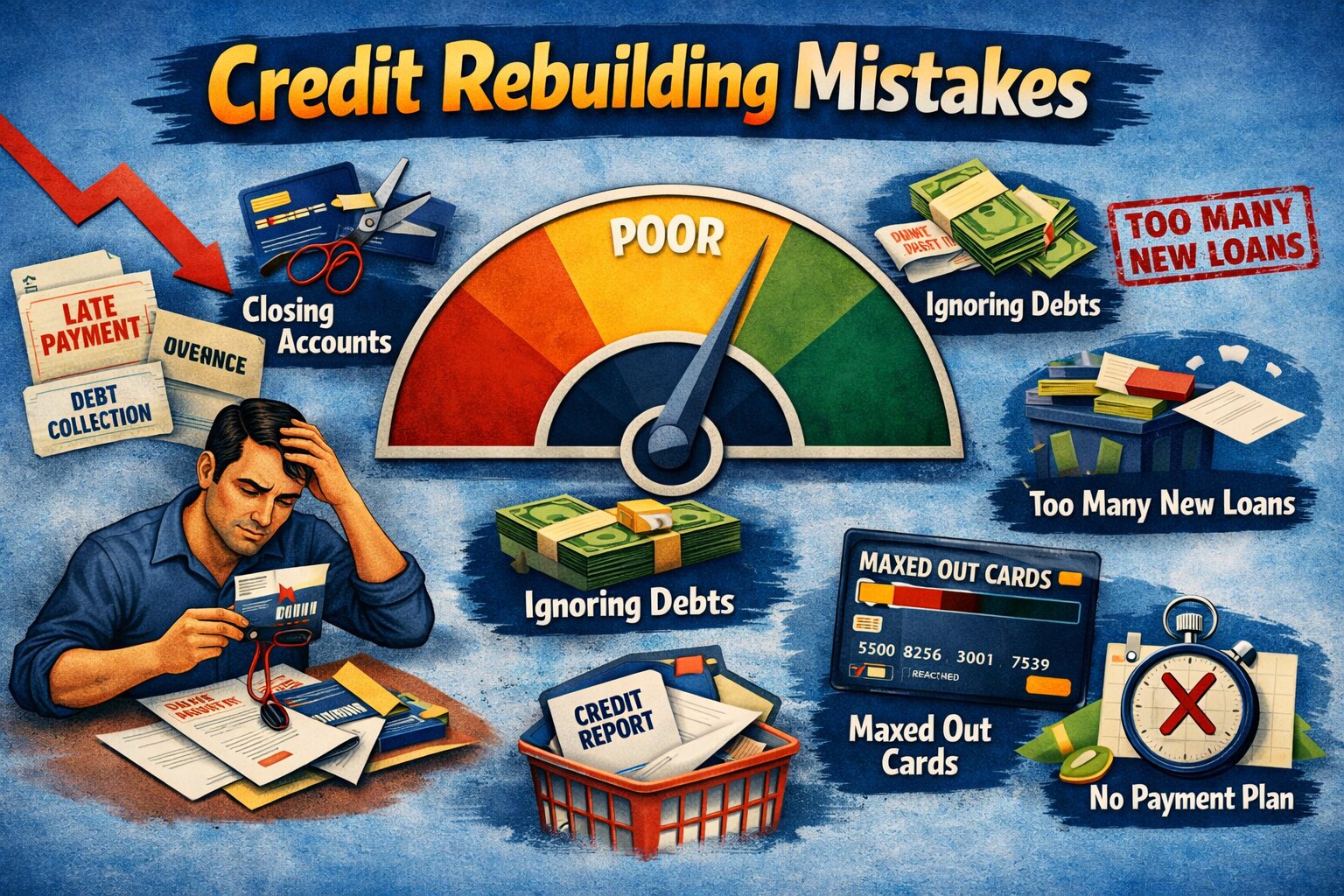
Rebuilding credit after a setback takes time, and most people understand that. What they do not always understand is that certain common behaviors during the rebuilding process actively slow things down or push scores in the wrong direction. Good intentions are not enough if the strategy behind them is off. These are the seven mistakes that come up most consistently, and more importantly, what to do differently.
1. Closing Old Accounts After Paying Them Off
Paying off an old credit card and immediately closing it feels like a clean, responsible move. It is actually one of the more damaging things you can do to a score that is already trying to recover. Two things happen when you close an account. First, your total available credit drops, which pushes your credit utilization ratio higher. Second, if the account is older, closing it shortens your average account age over time. Both factors work against you. The better approach is to pay the card down to zero and leave it open with a small recurring charge, such as a streaming subscription, set to autopay each month. The account stays active, your utilization stays low, and the account age keeps building. The Consumer Financial Protection Bureau’s credit basics page has a clear explanation of how utilization and account age factor into scores.
2. Applying for Multiple Cards at the Same Time
When you apply for new credit, the lender performs a hard inquiry on your credit report. One hard inquiry drops your score by a small amount that recovers within a few months. Applying for three or four cards in a short period stacks those drops simultaneously and signals to lenders that you are in financial difficulty. This is the opposite of what someone rebuilding credit wants to communicate. The right approach is to apply for one product at a time, wait at least three to six months between applications, and choose products you are likely to be approved for based on your current score range. AnnualCreditReport.com lets you check your reports from all three bureaus for free, which gives you a realistic picture of where your score sits before you apply for anything.
3. Using a Secured Card at High Utilization
Secured credit cards are one of the best tools for rebuilding credit, but only if you use them correctly. The most common mistake is treating a secured card like a regular spending card and letting the balance climb close to the credit limit. A card with a $300 limit carrying a $280 balance has a utilization rate of over 90%, which pulls the score down regardless of whether you pay the balance in full each month. Utilization is calculated at the statement closing date, not the payment due date. Keeping your balance below 10% of the limit, ideally below $30 on a $300 card, is the strategy that produces score gains. Paying the balance down before the statement closes rather than after it posts is the key timing detail most people miss.
4. Ignoring Errors on the Credit Report
A significant share of credit reports contain at least one error, and errors during a rebuilding period have an outsized impact because every point matters when you are starting from a lower score. Accounts that do not belong to you, incorrect late payment dates, balances listed higher than the actual amount, and accounts that should have been removed but have not are all common errors that suppress scores unnecessarily. Checking all three reports, Equifax, Experian, and TransUnion, is important because errors do not always appear on all three. Disputes are submitted directly to each bureau through their websites or through the Consumer Financial Protection Bureau’s complaint portal. Bureaus are required under the Fair Credit Reporting Act (FCRA) to investigate disputes within 30 days and remove unverifiable information.
5. Skipping Credit Builder Loans in Favor of Waiting
Many people in the rebuilding phase take a passive approach, paying existing bills on time and waiting for negative items to age off the report. That strategy works eventually, but it works faster with active tools. A credit builder loan is a product specifically designed for this situation. The lender holds the loan amount in a savings account while you make monthly payments. When the loan is paid off, the funds are released to you and you have a positive payment history on your report. Credit unions and community banks are the most common providers. The National Credit Union Administration’s credit union locator finds credit unions near you that are open to new members and frequently offer credit builder products to people working on their scores.
6. Settling Debts Without Understanding the Credit Impact
Debt settlement, where you pay less than the full amount owed in exchange for the debt being considered resolved, is sometimes presented as a fast path to financial recovery. The credit impact is more complicated than that framing suggests. A settled account is reported as “settled” rather than “paid in full” on your credit report, and that distinction carries a negative connotation to lenders for years. Settled accounts remain on your report for seven years from the original delinquency date. In some cases, paying a collection account in full, even years later, is better for long-term score recovery than settling for less. Before agreeing to any settlement, asking the collector in writing whether they will report the account as “paid in full” rather than “settled” is worth the conversation. Getting that agreement in writing before payment is essential because verbal promises from collectors are not binding.
7. Expecting Results Too Quickly and Giving Up
Credit rebuilding timelines are longer than most people expect, and that gap between expectation and reality leads to a specific kind of mistake: abandoning the strategy before it has time to work. A person who starts with a secured card in January, keeps utilization low, and pays on time every month may not see a meaningful score increase until month four or five. Someone who does not see movement by month two may conclude the strategy is not working and either stop using the card or apply for additional products out of frustration, both of which create new problems. The most reliable data on credit rebuilding consistently shows that on-time payment history, kept up consistently over 12 to 24 months, produces the most durable score gains of any single factor. Understanding your credit rebuild mistakes and correcting them early means your timeline is as short as it can realistically be rather than longer than it needs to be.
Leave a Reply